
Posted 2 October 2025
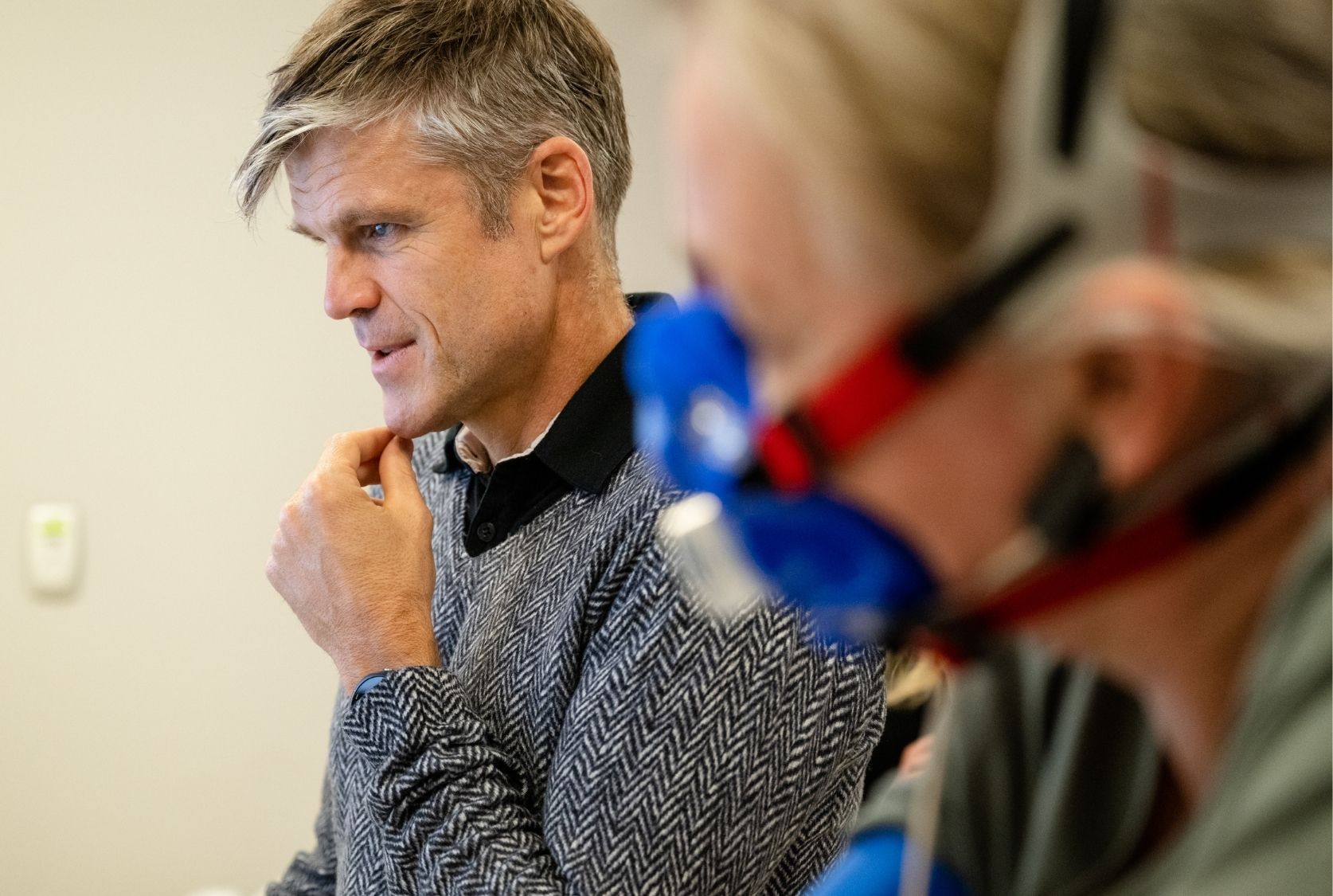
Forget the myth that exercise uses up your heartbeats. New research – reported in The Australian and The Age – shows fitter people use far fewer total heartbeats per day – potentially adding years to their lives.
The study led by sports cardiologist Professor André La Gerche tracked the daily heart activity of 109 athletes 38 non-athletes using continuous heart rate monitoring. The results were striking.
Athletes had an average heart rate of 68 beats per minute (bpm), whilst non-athletes had 76bpm which translates to a total of 97,920 beats per day for athletes and 109,440 beats per day for non-athletes – around 10 percent less.
“That’s an incredible saving of about 11,500 beats a day,” says André, Head of the HEART Laboratory supported by St Vincent’s Institute of Medical Research (SVI) and Victor Chang Cardiac Research Institute (VCCRI).
“Even though athletes’ hearts work harder during exercise, their lower resting rates more than make up for it.”
The study published in JACC: Advances found the fittest individuals had resting heart rates as low as 40 beats per minute, compared to the average 70–80 bpm.
That means over 24 hours, athletes use fewer total heartbeats than sedentary people, even after factoring in the spikes from training sessions.
The findings bust the long-standing saying, popularised by US President Donald Trump, that the body is a battery with a finite amount of energy and that exercise only depletes it.
“The fitter you are, the more metabolically efficient your body becomes,” André explains. “Even if you’re training hard for an hour a day, your heart beats more slowly for the other 23 hours. The net effect is fewer beats used overall.”
This lower resting heart rate is not only a sign of fitness but also a predictor of better health outcomes. André says increasing physical activity, when done safely, can improve heart function and reduce long-term cardiovascular risk.
“Exercise is strongly linked with improved mental health, longer lifespan and lower rates of heart disease,” he says.
While extreme endurance events like the Tour de France can temporarily raise daily heartbeat counts, André says the benefits of regular, moderate exercise far outweigh any risks.
“The biggest bang for your health buck is going from unfit to moderately fit. Just a few hours of purposeful exercise each week can transform your heart’s efficiency and help make every beat count. It may even extend your life by years,” he says.
Find out more about the HEART Lab