
Posted 14 October 2025
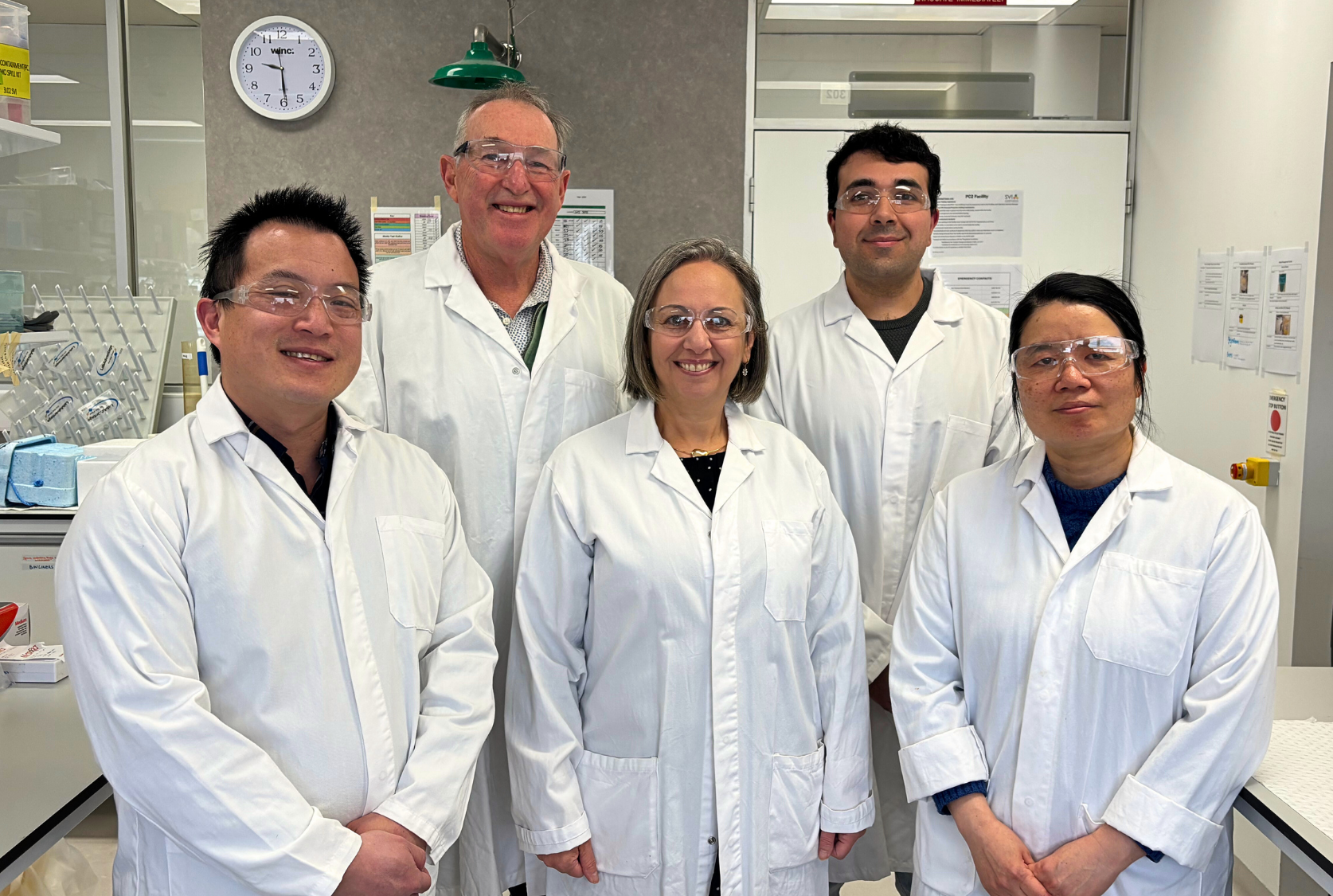
A breakthrough led by SVI’s Carmelo Cerra and Dr. Jian Kang has uncovered how certain ovarian cancer cells survive treatment, and more importantly, how they can be eliminated.
The team conducted the research in close collaboration with Dr Keefe Chan, Professor Rick Pearson and PhD candidate Madeleine Tancock from the Peter MacCallum Cancer Centre. Their findings were recently published in the prestigious scientific journal Cell Death Discovery.
Associate Professor Elaine Sanij, who helped guide the study, praised the leadership of Carmelo and Jian in this important project.
“Carmelo’s work was instrumental – he is a co-first author on the paper – and both he and Jian drove this discovery forward,” she said.
The study focuses on high-grade serous ovarian cancer (HGSOC), the most common and deadly form of ovarian cancer. While initial treatments often shrink tumors successfully, most patients experience a relapse. That’s because a small population of cancer cells manage to survive treatment, lying dormant and resistant to further therapies.
The research team wanted to understand how these cancer cells manage to “hide” from chemotherapy – and how they might be targeted before they can return.
They found that after treatment with standard chemotherapy (cisplatin) and a newer drug (CX-5461, also known as Pidnarulex), many ovarian cancer cells enter a state known as therapy-induced senescence (TIS). In this state, the cells stop growing but aren’t entirely dead, which means they can potentially “wake up” and begin growing again – leading to a return of the cancer.

But here’s the exciting part: the team discovered that these senescent cancer cells undergo changes in how they process iron, leading to a dangerous buildup inside the cells. This overload makes them vulnerable to a specific form of cell death called ferroptosis – essentially, iron-driven self-destruction.
By using drugs that trigger ferroptosis, the researchers were able to selectively kill the dormant, therapy-resistant cancer cells, a potential game-changer in preventing relapse.
 This new vulnerability gives scientists and clinicians a new target: residual cancer cells after initial therapy. Instead of waiting for the cancer to come back, future treatments might eliminate these dangerous stragglers before they cause harm.
“This study advances understanding of how ovarian cancer develops resistance to therapy and offers a potential new path toward improving patient outcomes,” said Elaine.
“It’s a real testament to collaborative science and the vision of our emerging leaders in cancer research.”
Jian is a Christine Martin Fellow, supported by 5Point Foundation.
The contributors would also like to acknowledge funding from the United States Department of Defense Ovarian Cancer Research Program awarded to Dr Keefe Chan.
Read the article