
Posted 9 April 2026
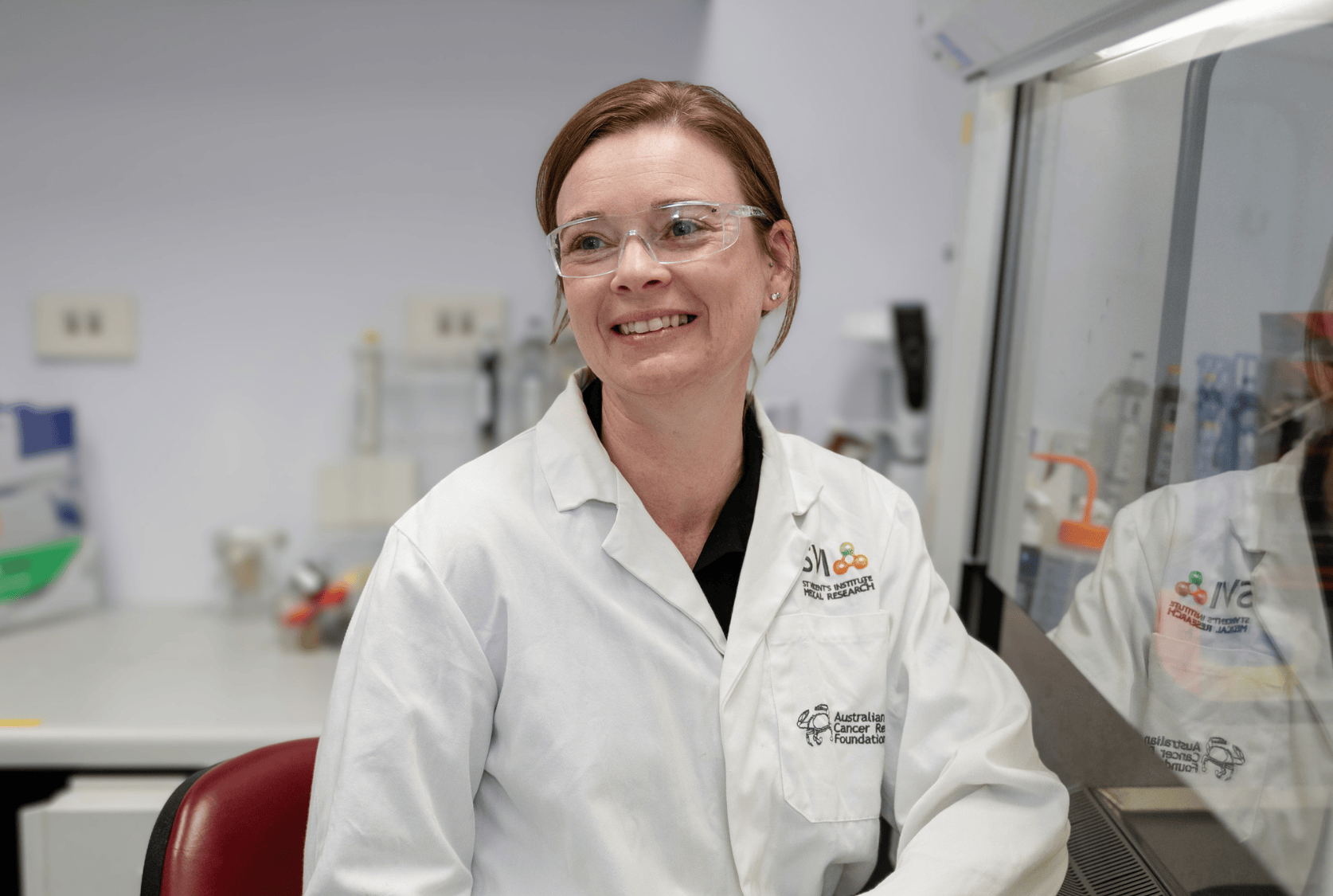
Dementia is one of the leading causes of death worldwide, yet current treatments cannot stop the disease. At SVI, Dr Emma van der Westhuizen is determined to tackle this challenge, thanks to the generosity of the Yulgilbar Foundation.
Emma is developing new drug-like molecules that target a tiny but powerful part of our cells called the lysosome: the cell’s “clean-up crew”. Lysosomes recycle waste such as sugars, fats and DNA. When they stop working properly, scraps of DNA can leak into the cell, triggering inflammation and cell death. In the brain, this inflammation is believed to be one of the factors that drives dementia.
Emma’s research focuses on boosting the activity of an enzyme called PLD3, which helps break down DNA inside lysosomes. Emma and her team are designing small molecules to increase PLD3 activity and are testing whether they can reduce inflammation in cells with faulty recycling systems.
If successful, these molecules could move into further pre-clinical testing as a potential new treatment approach for dementia.
A molecular pharmacologist trained in Australia and internationally, Emma joined SVI in 2023. She has been described as an exceptional researcher with the drive and skill to develop innovative therapies.
Philanthropy makes this work possible. In Emma’s case, support for a Rising Star Fellowship from the Yulgilbar Foundation gives her the stability to focus fully on developing and testing new drug candidates at a critical stage in her career. It allows promising ideas to be explored rigorously and moved closer to real-world impact, accelerating discoveries that may otherwise take years to get off the ground, and bringing new hope to people and families affected by dementia.
“I am enormously grateful for the philanthropic support of the Yulgilbar Foundation,” says Emma.
“Their commitment to early-stage research means that my team and I can continue pursuing new therapeutic strategies for Alzheimer’s disease and translating fundamental discoveries into potential medicines.”
Find out more about the Structural Biology Lab