
Posted 5 June 2026
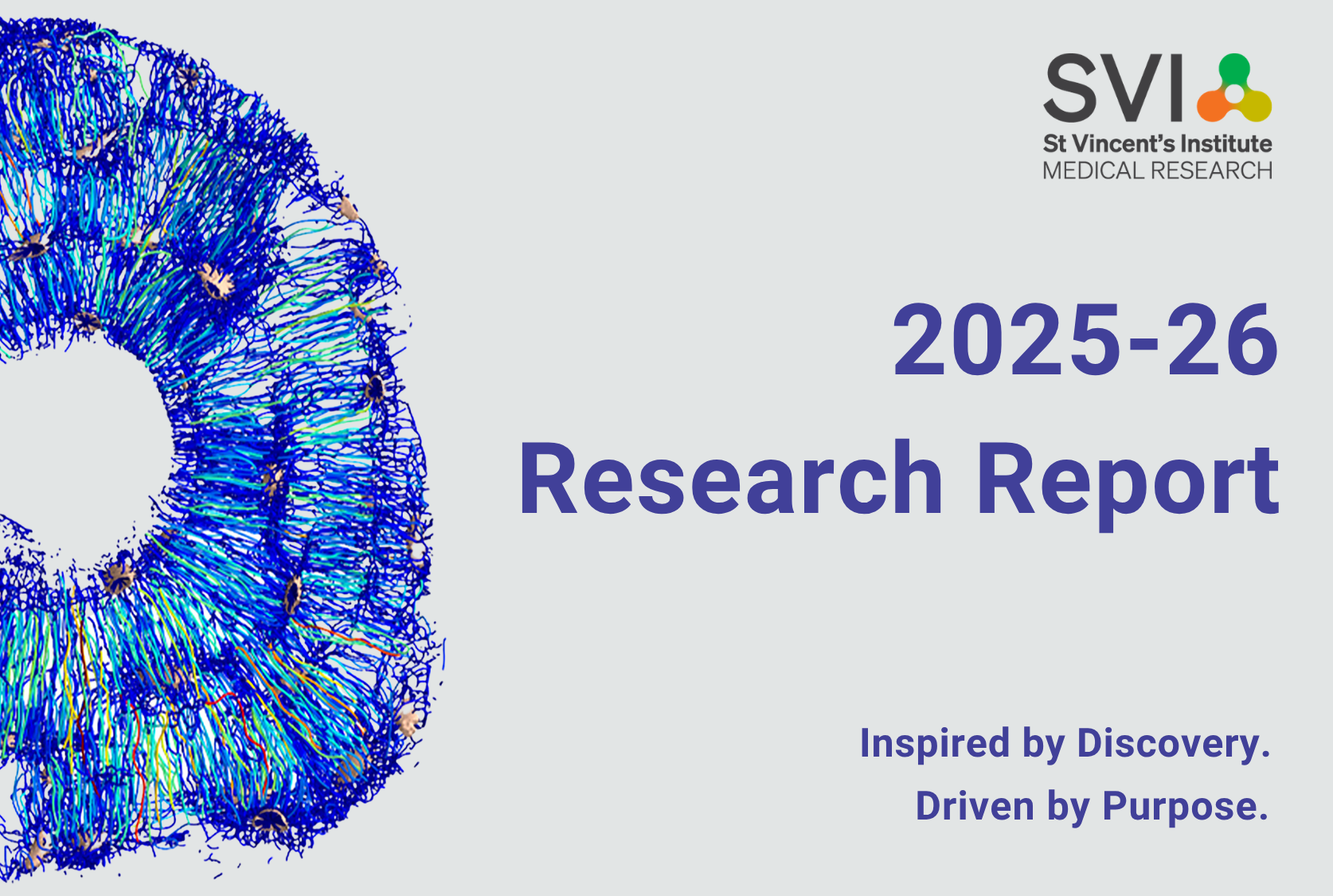
SVI Director Professor Tom Kay presented the 2026 SVI Research Report at our Annual General Meeting in May, marking a year where advances across the Institute continued to redefine the possibilities of medical research.
The report reflects another year of purpose-driven progress, with particularly exceptional advances across AI-driven tools to improve breast cancer detection, gene-editing therapies, immunology, cardiovascular health and cancer biology.
AI takes breast cancer screening beyond the “all clear”
One of the year’s standout milestones came through BRAIx, an AI-powered breast cancer risk tool developed by Associate Professor Davis McCarthy, Associate Professor Helen Frazer and collaborators. Published in The Lancet Digital Health, BRAIx estimates a woman’s future breast cancer risk more accurately than current approaches, with the potential to enable more personalised screening and earlier intervention.
Turning the page on bone marrow failure
Associate Professor Andrew Deans and his team are working towards safer treatments for inherited bone marrow failure syndromes by developing ways to repair a patient’s own stem cells using precision gene editing. The work represents an important step towards less toxic, less disruptive therapies that could ultimately benefit people living with a range of genetic diseases.
A brainy new approach to outsmarting obesity
Dr Kim Loh and PhD student Danise Ann Onda are uncovering new ways to tackle obesity, one of Australia’s biggest health challenges. The team identified a brain protein called SIK3 that regulates both appetite and energy use, opening the possibility of future therapies that not only reduce food intake but help the body burn more energy while preserving muscle mass.
Getting to the heart of fitness
Professor André La Gerche and SVI’s HEART Lab challenged conventional thinking around exercise and cardiovascular health this year. New findings revealed that elite endurance athletes may face elevated risks of heart rhythm disorders, while additional research reinforced the broader long-term benefits of fitness, helping reshape how researchers think about exercise and heart health.
The 2026 Research Report reaffirms SVI’s mission to bring the best minds to solve critical health challenges, empowering leading scientists to push the boundaries of medical research. The Institute remains committed to nurturing our invaluable community of students, researchers, clinicians, philanthropists, industry, and the public to turn discovery into lasting impact.
Read the 2025-26 Research Report