Posted 3 June 2026
A new study from SVI’s Diabetes & Metabolic Disease Lab has revealed a promising new way that the body regulates weight and blood sugar, by focusing on how the brain controls hunger, energy use and metabolism.
Obesity affects more than a billion people worldwide, with one in four adults in Australia living with obesity, and significantly increases the risk of serious conditions like type 2 diabetes, liver and heart disease. While current weight-loss drugs have helped many people, they don’t work for everyone and can come with limitations. This has driven researchers to look for entirely new ways to tackle obesity.
Many of today’s leading weight-loss treatments, including GLP-1 based therapies, work by helping people feel full and eat less, by mimicking a natural hormone released after eating that signals fullness to the brain. While effective, obesity is complex and also involves how the body stores and expends energy, leading researchers to search for new approaches.
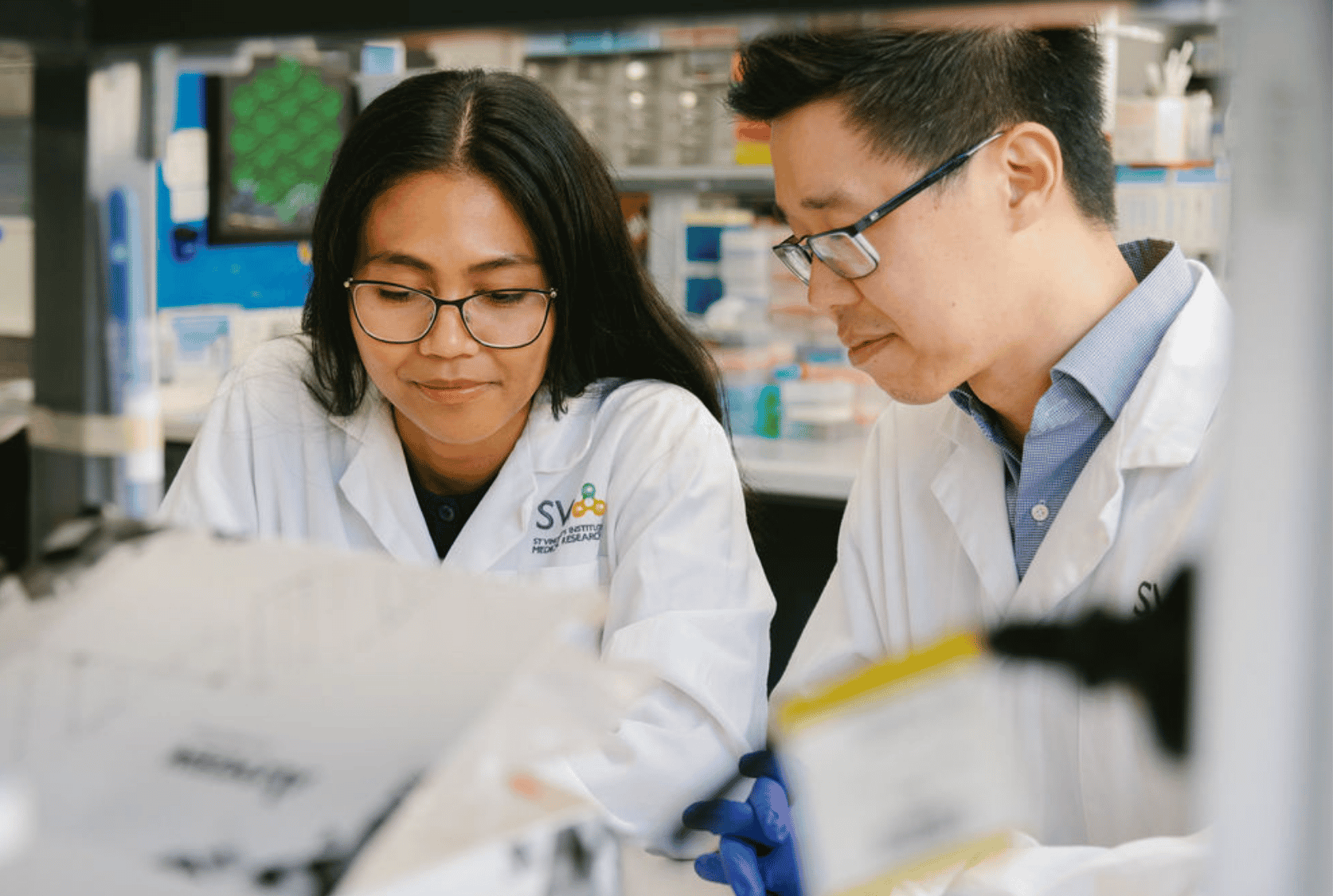
In contrast, new research led by researcher Danise Ann Onda, under the supervision of Dr Kim Loh, explores a different approach. Instead of mimicking a hormone, this work focuses on a protein in brain cells called SIK3, which for the first time, has been shown to control not only caloric intake, but also how the body uses energy.
In preclinical studies, the team found that SIK3 activity was higher in the brains of mice with obesity. When they reduced the activity of this protein in specific brain cells, the effects were striking: the mice not only ate less, but burned more energy and gained less weight, even whilst being fed a high-fat diet. They also showed improved blood sugar control, an important factor in preventing and managing diabetes.
The researchers then repeated the studies, but now using a drug that blocks SIK3, leading to significant weight loss and improved metabolic health. Importantly, at certain doses, the animals lost weight but maintained their muscle mass, something that is difficult to achieve with many existing treatments and critical for long-term health. This is key, as preserving muscle is important for strength, metabolism and overall long-term health.
While still early, these findings point to a promising new approach that could complement existing approved therapies by helping the body not only eat less, but also use energy more effectively.
“This study shifts how we think about treating obesity – instead of focusing only on food intake reductions, it targets the brain’s control of metabolism to help the body burn more energy, offering the potential for more effective, long‑lasting treatments,” said Kim.
The research was a highly collaborative initiative, bringing together scientists from SVI, Australian Catholic University, the University of Melbourne, Monash University, the Baker Heart and Diabetes Institute, and international partners including the University of Copenhagen and Osaka University. SVI researchers including Xiaozhuo Yuan, Yifei Zhu, Dr Ashley Ovens and Dr Dingyi Yu also played key roles in the study.
This new research, published in Nature Communications, opens the door to an entirely new class of discoveries based on a different biological pathway. The team is now working towards translating these findings into potential new therapies, offering hope for more effective, longer-lasting solutions to obesity and related diseases.
Access the article