Posted 2 July 2026
SVI has secured landmark funding to progress a gene editing program aimed at transforming treatment for rare bone marrow failure syndromes through the Medical Research Future Fund (MRFF) Stem Cell Therapies Mission.
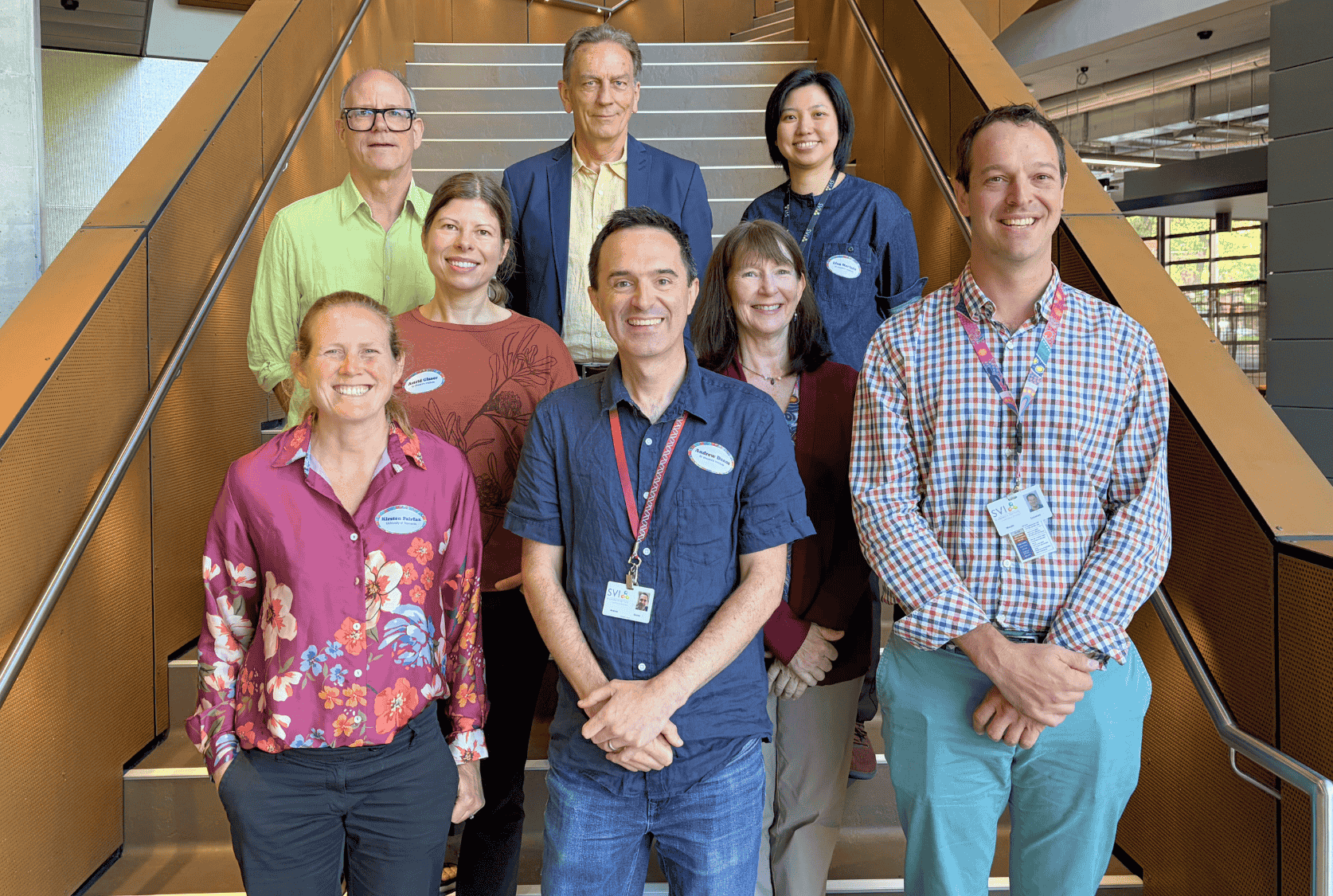
The project, ‘NEXTPAGE – Next-generation EXperimental cell Therapies in Patients, using Advanced Gene Editing’, is led by Associate Professor Andrew Deans, Head of SVI’s Genome Stability Lab, and brings together researchers, clinicians, industry partners and patient advocacy organisations from Australia and around the world.
Integral to the initiative are the expertise of fellow SVI researchers Dr Astrid Glaser, Associate Professor Wayne Crismani, Lina Mariana and Associate Professor Jörg Heierhorst. They’re joined by leading researchers from Monash University, Children’s Medical Research Institute, Sydney Children’s Hospital, the University of Tasmania, Fundacion Jimenez Diaz Health Research Institute in Spain and the Broad Institute in the United States.
Less toxic and more targeted: a new treatment pathway
Inherited bone marrow failure syndromes are rare but devastating genetic conditions that prevent the bone marrow from producing healthy blood cells. Around one in 60,000 Australians are affected. Currently, the only available therapy is a donor stem cell transplant, which requires intensive chemotherapy, long hospital stays and carries serious risks.
With $5 million in funding, NEXTPAGE aims to offer a safer and more effective alternative by correcting a patient’s own blood-forming stem cells using advanced gene editing. The approach involves removing stem cells from the patient, precisely repairing the faulty gene using a cutting-edge technique called prime editing and mRNA delivery technology and then returning the corrected cells to the person.
“This funding allows us to move from years of foundational research to the next critical step: bringing gene-edited stem cell therapies into the clinic,” said Associate Professor Deans.
“Our goal is to develop treatments that are safer, less toxic and far less disruptive for young people and their families.”
From pilot study to patient care
The initiative is built around four key objectives: developing a clinical grade gene editing platform; validating gene correction in real mutations identified in Australian patients; conducting comprehensive long-term safety and engraftment studies; and preparing manufacturing and regulatory pathways to support a first-in-human clinical trial in Australia.
The project builds on the team’s MRFF-funded PAGETURNA pilot study. Through PAGETURNA, SVI researchers developed and tested precise gene-editing tools and showed they could correct disease-causing mutations in patient-derived stem cells, and built a strong network of stem cell biology, mRNA delivery, transplantation and gene editing experts.
NEXTPAGE will take this further, scaling toward a fully clinic-ready platform, with a focus on safety, manufacturing and regulatory approval for human trials.
Lived experience driving lasting change
Importantly, people with bone marrow failure syndromes and their families are central to the project’s design. Consumer organisations including Maddie Riewoldt’s Vision, Fanconi Anaemia Support Australasia and Team Telomere have played a hands-on role in shaping priorities, with a strong focus on safety and quality of life.
If successful, NEXTPAGE could establish a new benchmark for gene-edited stem cell therapies in Australia, with applications across a broad range of other genetic disorders.
Genome Stability
We investigate the process of DNA repair, with applications in treatment of genetic disorders, cancer diagnosis and cancer therapy.
Lab head: Associate Professor Andrew Deans