Posted 26 August 2026
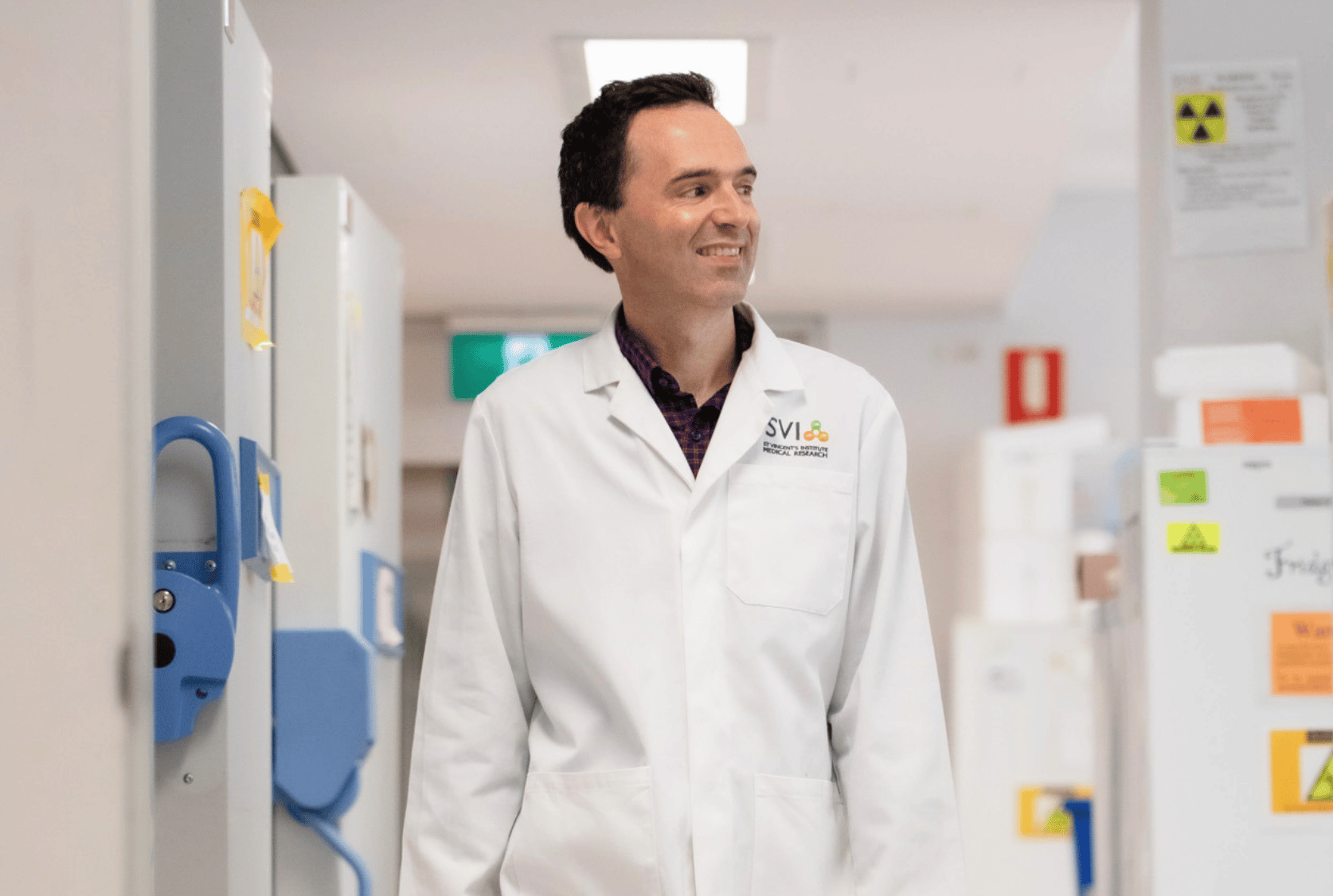
SVI researchers have been awarded a grant from the US-based Bloom Syndrome Association to investigate a gene editing approach that could one day lead to better treatments for the condition. The rare inherited disorder greatly increases the risk of cancer and other serious health complications.
Led by Associate Professor Andrew Deans and Dr Astrid Glaser, the project will explore whether a next-generation gene editing technology known as Prime Editing can safely repair disease-causing mutations.
Bloom Syndrome is a rare inherited disorder caused by mutations in the BLM gene, which plays a critical role in repairing damaged DNA. People living with the condition have a greatly increased risk of developing cancer at a young age, as well as growth problems, immune deficiency and increased susceptibility to infections. There are currently no treatments that address the underlying genetic cause of the disease.
Most gene editing tools work by cutting straight through the DNA strand and relying on the cell to stitch it back together with the correction made. Prime Editing is different: it works more like a genetic “search and replace” tool, correcting DNA without cutting the strand right through. This makes it particularly well suited to Bloom syndrome, because the cells of people with the condition are not good at repairing that kind of damage.
The researchers will design and test customised gene editing tools for the most common BLM mutations before evaluating whether they can restore normal gene function in cells from people living with the condition.
The project builds on more than 15 years of research in the Genome Stability Lab into inherited disorders that affect DNA repair, including Bloom Syndrome and Fanconi anaemia. It also extends SVI’s broader NEXTPAGE gene editing program, which is developing new treatments for inherited genetic conditions.
The team has already achieved encouraging results using Prime Editing in Fanconi anaemia, successfully correcting disease-causing mutations in preclinical studies. This new funding will allow them to apply the same technology to Bloom Syndrome and generate the evidence needed to support future clinical development.
“Prime Editing gives us the opportunity to correct disease-causing mutations with an unprecedented level of precision,” said Andrew.
“By building on our previous work in Fanconi anaemia, we’re now applying this technology to Bloom Syndrome with the goal of generating the evidence needed to move this approach closer to the clinic.”
The project will also be carried out in close partnership with the Bloom Syndrome community, with patients and families helping to identify the mutations that would have the greatest impact if successfully targeted.
If successful, the research will lay the foundation for future clinical trials that test the therapy in individuals with Bloom Syndrome.
Genome Stability
We investigate the process of DNA repair, with applications in treatment of genetic disorders, cancer diagnosis and cancer therapy.
Lab head: Associate Professor Andrew Deans