
Posted 2 June 2025
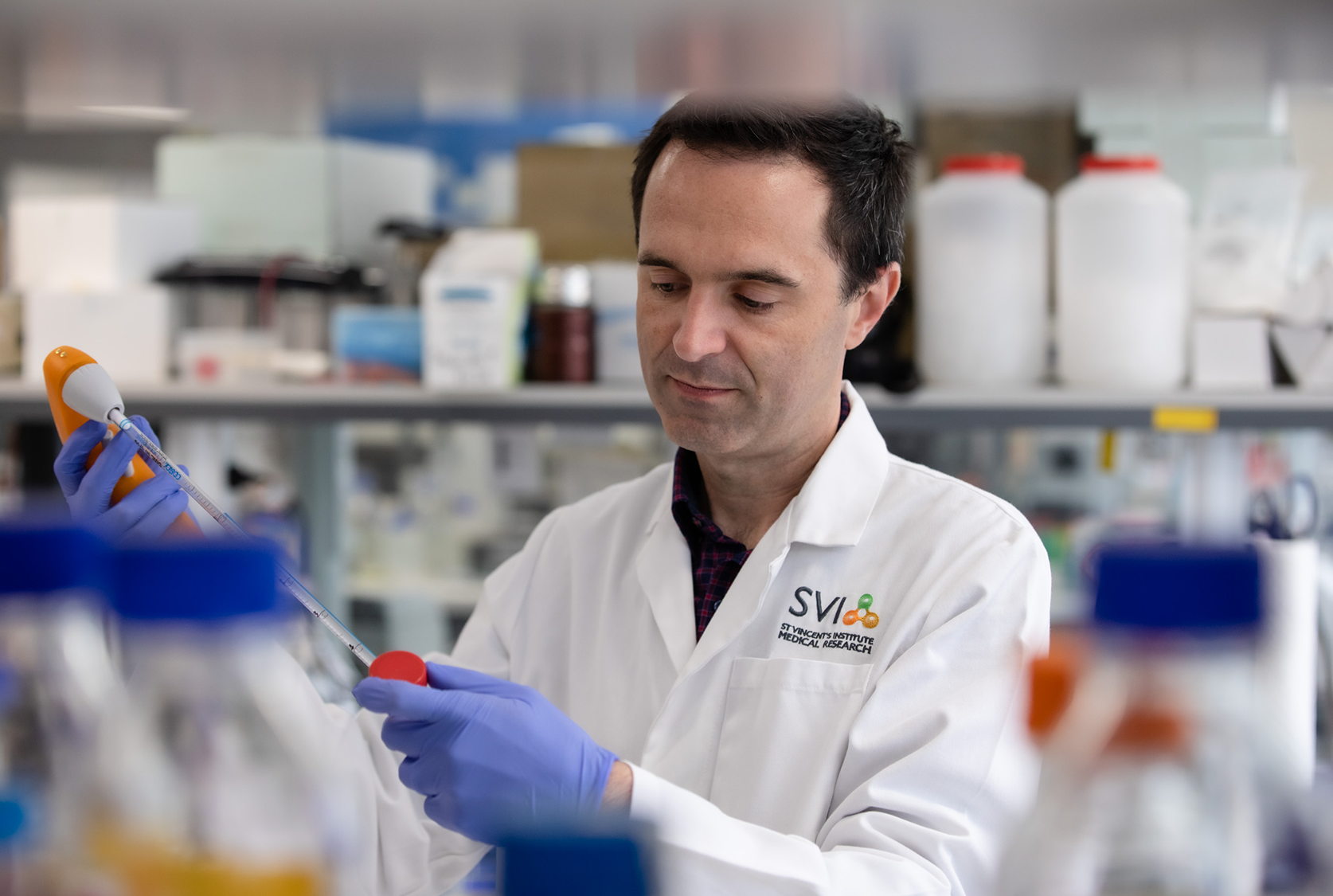
SVI researchers have made a breakthrough discovery about a protein that protects our DNA, potentially opening new doors for cancer treatment.
The Genome Stability team, in collaboration with researchers at the Francis Crick Institute in London, has revealed how a protein called FANCM works to repair damaged DNA and could be targeted in treatment of cancer.
“FANCM is like a guardian of our genetic material,” explains Associate Professor Andrew Deans, who led the research. “It identifies broken or tangled DNA and either fixes it directly or calls in other repair machinery.”
Using advanced imaging technology, the scientists captured 3D pictures of the FANCM protein in action. It recognises only the unusual shapes of damaged DNA, then clamps on. Once attached, it switches on a tiny motor that zips along the DNA and restores its normal shape.
“The new results are exciting because we now understand exactly how FANCM protein works at the molecular level,” says Associate Professor Deans. “It’s a really complex machine that’s beautiful to finally see in action, but it also has its weak spots.”
These weak spots are critical. Deans’ previous work discovered that certain cancer cells, including rare and aggressive sarcomas, have become dependent on FANCM to keep dividing and growing. These cancers use an unusual survival mechanism that makes them particularly vulnerable when FANCM is blocked, and the weak spots are places where drugs could be developed for therapy. Sarcomas are cancers of the bone, cartilage, and soft tissues, and treatment options for patients haven’t significantly improved in over 40 years.
The research was conducted in partnership with a Europe-based company developing drugs that target FANCM to treat these aggressive cancers like sarcomas.
“Our partnership with industry means this research isn’t just sitting on a shelf,” Deans explains. “The company is already using our findings to design new drugs that could make cancer cells more vulnerable to treatment while sparing healthy cells.”
The research was funded by the Australian Government’s National Health and Medical Research Council and has been published in EMBO J.
Find out more about the Genome Stability Lab