Posted 24 April 2026
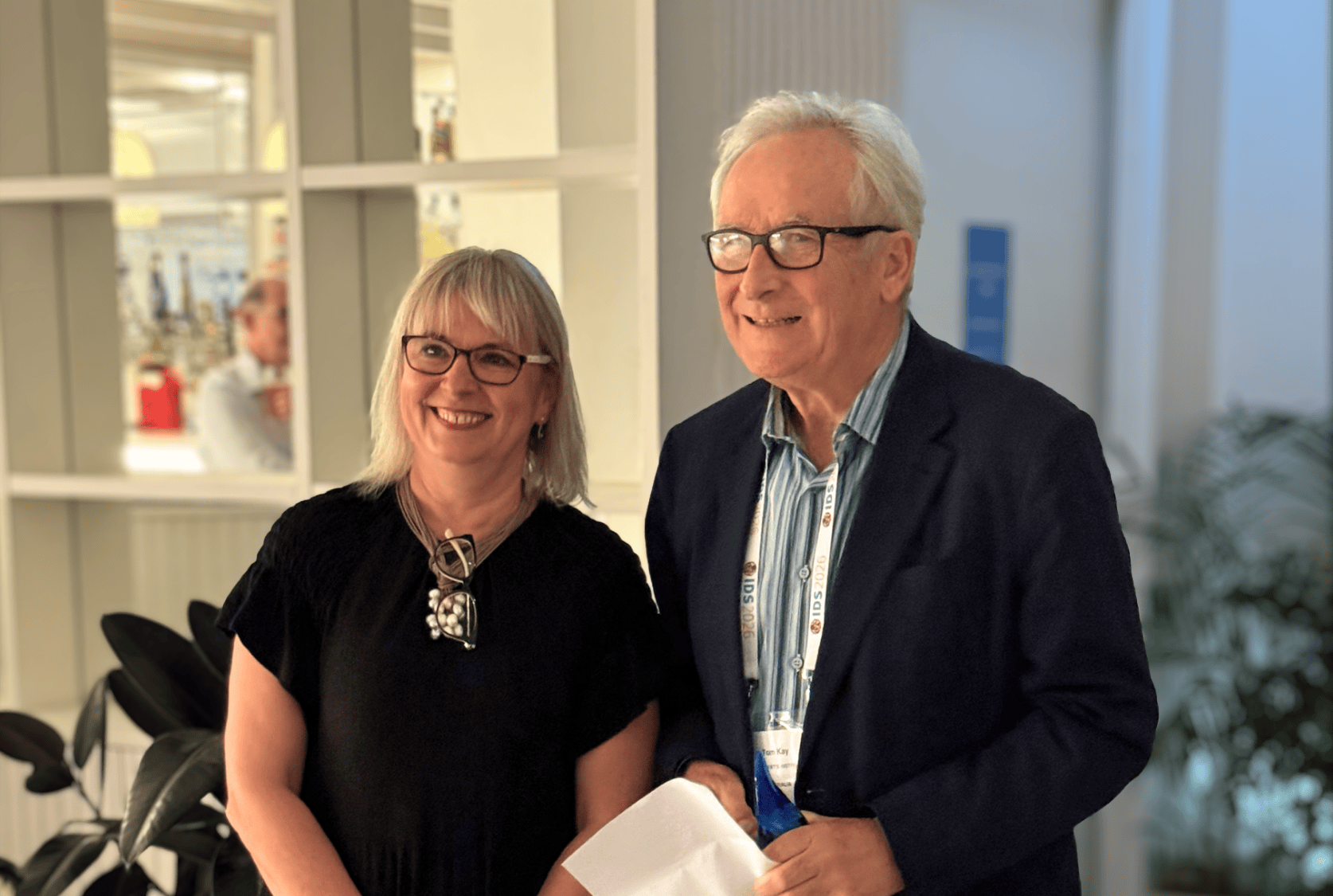
SVI Director Professor Tom Kay has received the Breakthrough T1D Luminary Award for his dedication to type 1 diabetes research.
In addition to his 24-year long role as SVI Director, Tom is internationally recognised for his innovative research into type 1 diabetes. His work spans initiatives from delaying and preventing the onset of the disease, to helping people with type 1 diabetes make their own insulin again using islet transplants.
Tom was presented with the Breakthrough T1D Luminary Award at the Immunology of Diabetes Society (IDS) 2026 congress by Dr Dorota Pawlak, Chief Scientific Officer at Breakthrough T1D Australia.
Dr Pawlak said: “This recognition honours Professor Kay’s immense contribution towards groundbreaking research into advanced treatments for type 1 diabetes. His dedication and unwavering commitment to improving the lives of people living with type 1 diabetes changed the islet transplantation landscape in Australia, drove immense progress in diabetes immunology and placed Australia as a global leader in T1D clinical trials.”
Accelerating treatments for T1D
Tom co-leads the Australasian Type 1 Diabetes Immunotherapy Collaborative (ATIC), a network created to deliver clinical trials of disease-modifying therapies to delay or prevent type 1 diabetes. Under Tom’s leadership, ATIC is now a well-established and connected clinical trials platform connecting the type 1 diabetes community, pharmaceutical industry and healthcare professionals, that seeks to bring new treatments to people living with the condition.
The BANDIT trial
One of the highlights of Tom’s career has been leading the successful BANDIT trial, the world’s first clinical trial of baricitinib. Results from the trial in 2023 showed that the drug can safely and effectively preserve the body’s own insulin production and slow the progression of type 1 diabetes in newly diagnosed people.
Subsequent clinical trials of baricitinib are now being run by Eli Lilly across 20 countries worldwide, aiming ultimately for regulatory approval for the drug as a routine treatment for type 1 diabetes.
Professor Phillip O’Connell, who collaborated with Tom on the BANDIT trial, said, “It is very rare for an investigator to undertake fundamental biological research into the pathogenesis of a disease, to propose a new clinical intervention based on their discoveries and go on to undertake a successful clinical trial. Tom’s contribution is ultimately based on his long-held understanding that T1D is fundamentally an autoimmune disease and needs to be treated as such.”
Islet transplants
Tom leads a Melbourne-wide islet transplant program that has been giving people with type 1 diabetes insulin-making cells from organ donors since 2006. This procedure gives people who are struggling to manage their condition the ability to make insulin again. Tom’s team continue their work to build a detailed understanding of how islets are destroyed and to develop more effective ways to protect transplanted islets.
Professor Leonard Harrison, internationally recognised type 1 diabetes researcher and Tom’s colleague said: “Tom is talented at recognising how cutting-edge techniques can be applied to answer clinically relevant questions and identifying excellent staff and collaborators to carry out research … There is no one more deserving of a Lifetime Achievement Award.”
A collaboration that spans decades
Breakthrough T1D has been supporting Tom’s work since 1998, when he received one of the earliest Breakthrough T1D (formerly JDRF) Career Development Awards.
They said, “We’re excited to see what new breakthroughs Professor Kay’s world-leading research brings for people with T1D.”