
Posted 15 June 2026
Modern humans carry traces of DNA inherited from Neanderthals and Denisovans, our ancient human relatives. But exactly what did we inherit, and how has it shaped us?
A new international study in Science, co-authored by SVI’s Associate Professor Irene Gallego Romero, is helping to answer this question. The study has led to the creation of the most comprehensive map to date of large-scale genetic variants inherited from archaic humans.
The findings shed new light on the legacy of interbreeding between modern humans and archaic human groups, which occurred about 50,000–60,000 years ago.
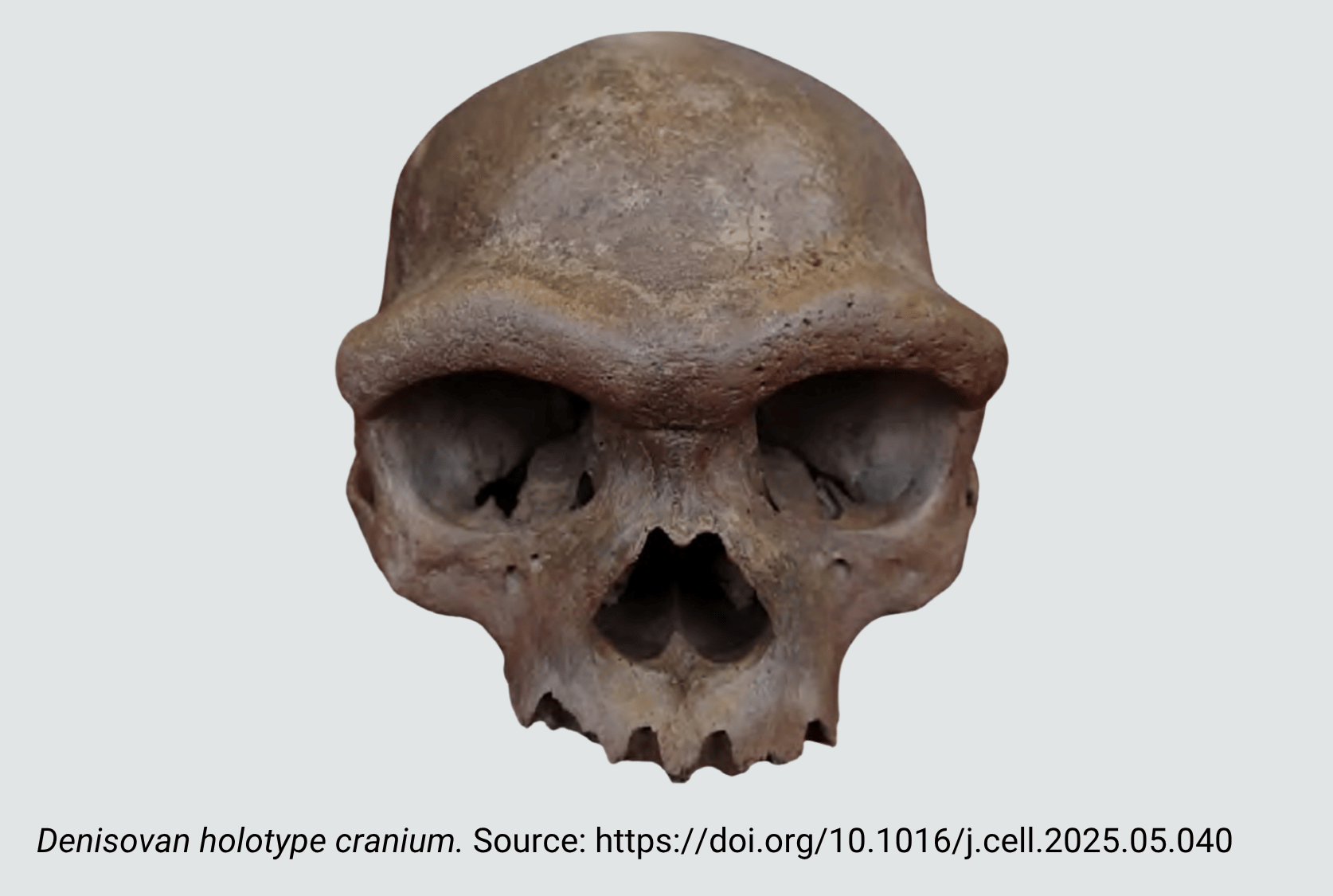 Using advanced genome sequencing technologies, the researchers analysed genomes from donors from Papua New Guinea, home to some of the highest levels of Denisovan ancestry in the world.
The team identified thousands of previously hidden genetic variants inherited from Neanderthals and Denisovans, many of which are located in or near genes involved in immunity.
The findings suggest that some ancient DNA may have helped modern humans adapt to new environments and infectious diseases as they spread across the globe.
“Ancient DNA isn’t simply a relic of our past,” said Irene, who leads SVI’s Human Genomics & Evolution Lab. “Some of the genetic variants we inherited from Neanderthals and Denisovans may have helped our ancestors adapt to new environments and diseases, and their influence can still be seen in human populations today.”
Researchers also uncovered evidence that centromeres, regions of chromosomes that are key to their structure, may have been inherited from archaic humans, a discovery that opens new avenues for understanding humanity’s past, and the complex web of relationships that have shaped our species.
The study highlights the importance of including diverse populations in genomic research and demonstrates that the legacy of ancient interbreeding continues to influence human biology today.
You can watch The Human Revolution on ABC iView to hear Irene explore the remarkable journey of ancient encounters that continue to shape us today.
Read the article

Available for Student Supervision