
Posted 23 June 2025
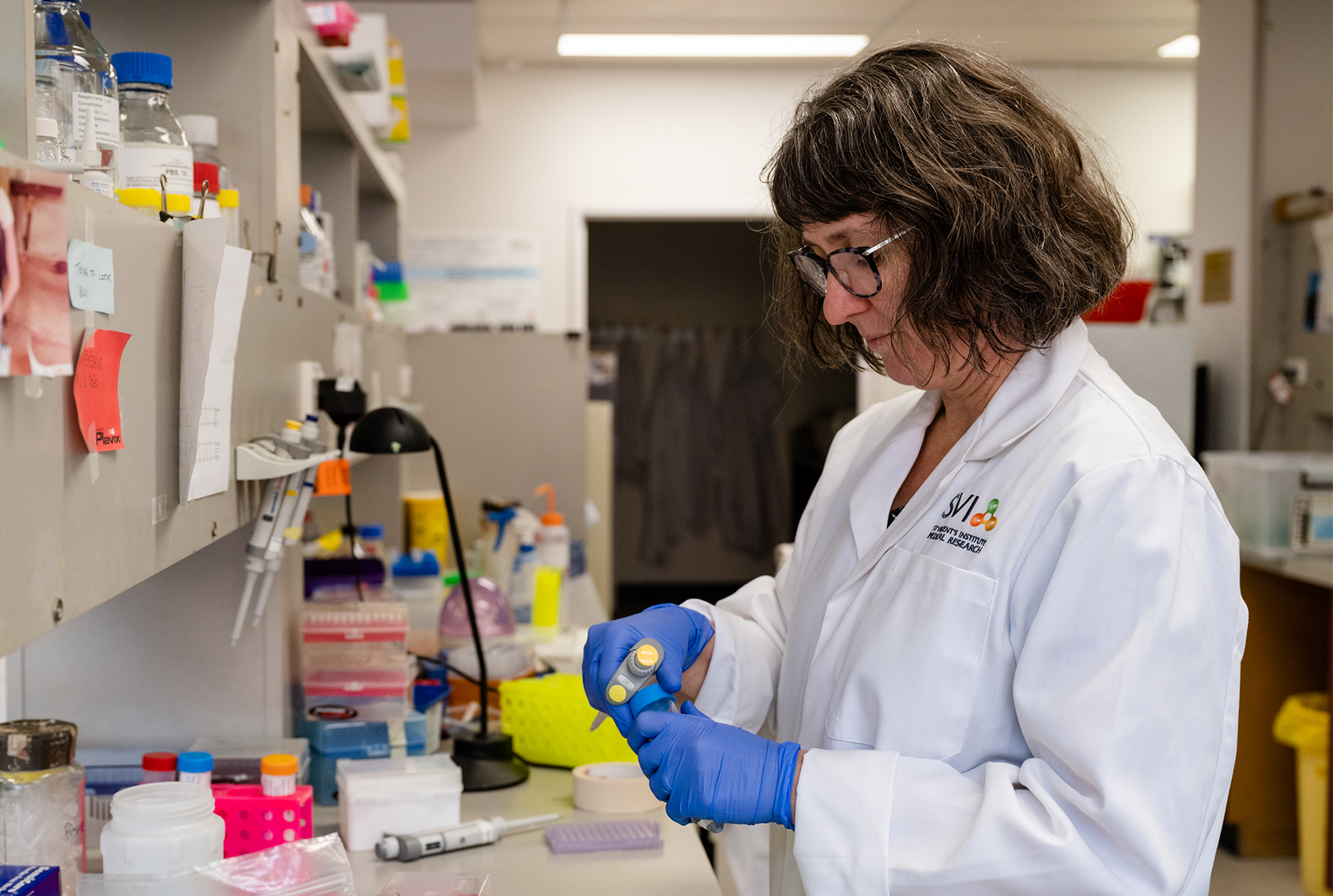
SVI researchers have uncovered an unexpected way the immune system helps maintain bone health, potentially forming the groundwork for new bone disease treatments.
The new study shows that immature neutrophils, white blood cells best known as ‘first responders’ to infection and injury, also act as guardians of bone health.
“We have uncovered a new communication pathway that protects the skeleton,” said Professor Natalie Sims, Head of Bone Cell Biology and Disease.
“We found that neutrophil precursors, which arise and mature in the bone marrow, have a second important role: they prevent excessive formation of osteoclasts, the cells that break down bone.
“So, even before they protect us against infection, they are protecting us against bone loss,” Professor Sims explained.
Osteoporosis is a condition of weak bones which are more likely to break, often in the hip, spine, or wrist. It usually develops due to bone loss over time and can be managed with diet, exercise, and medication.
Osteoporosis affects hundreds of millions of people worldwide and becomes more common with age. About 1 in 3 women and 1 in 5 men over 50 will experience a bone fracture due to this condition.
“Our next step is to find out exactly what it is that these cells produce that is so effective at inhibiting the osteoclasts. We have some good candidates already that we are testing,” said Professor Sims.
“Understanding this new pathway could lead to new therapies that strengthen bones and prevent fractures. We’re excited about the potential to improve bone health for millions of people.”
Access the article