
Posted 19 November 2025
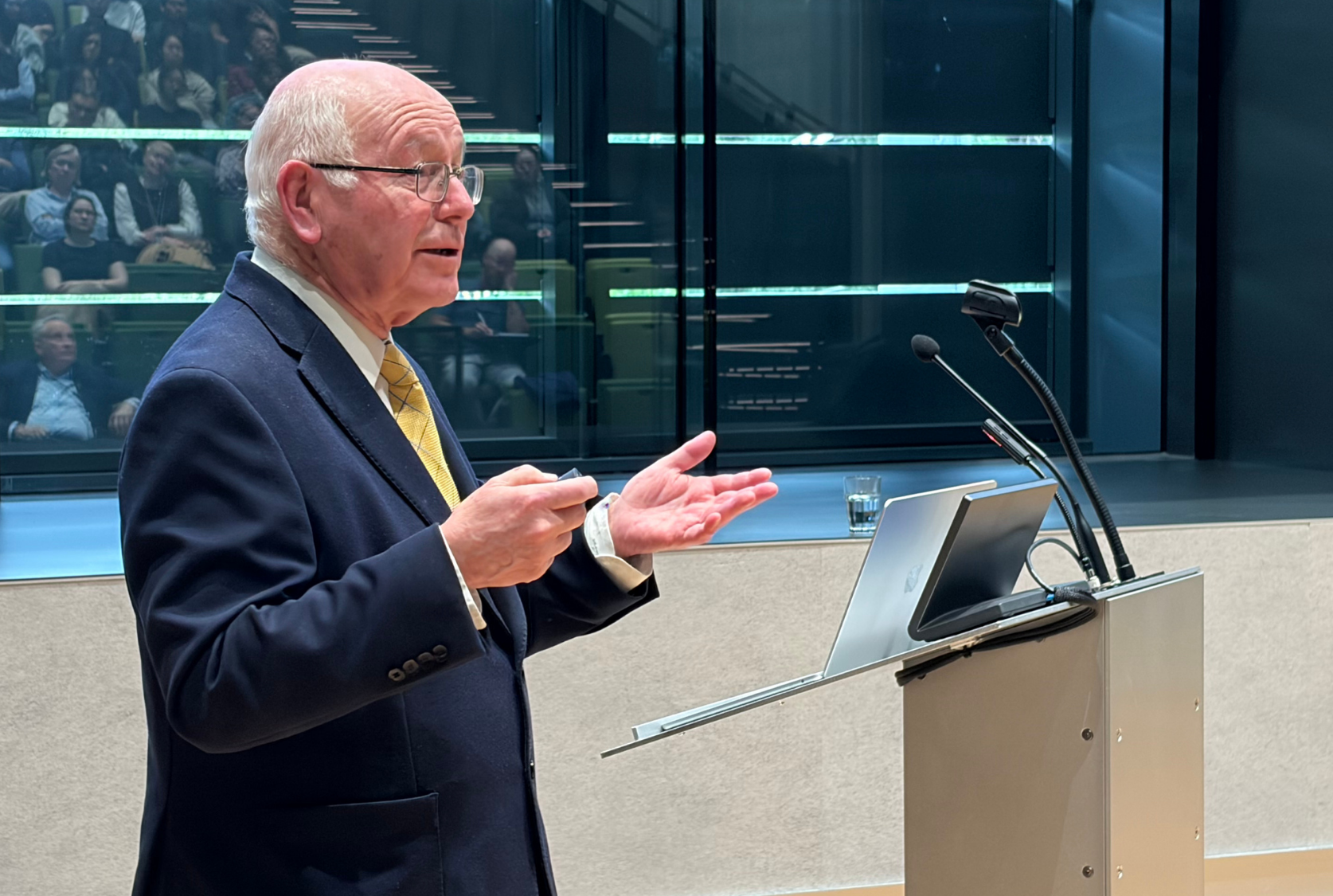
SVI had the honour of hosting Professor Sir Philip Cohen, a scientist whose discoveries have shaped modern biology, for a special seminar this week.
Addressing a full house at the ACMD auditorium, the first SVI event at the new facility, Professor Cohen shared insights into how mutations in the kinase ALPK1 can lead to rare genetic diseases, like ROSAH Syndrome and rare skin tumours called spiradenocarcinomas.
In his seminar, Professor Cohen explained how ALPK1 normally detects specific bacterial molecules. But in certain rare human diseases, mutations make ALPK1 hypersensitive to the body’s own molecules. This triggers chronic inflammation or tumour formation, even when no infection is present. This work identified a disease mechanism and potential therapeutic target, upon which pharmaceutical companies are currently working.
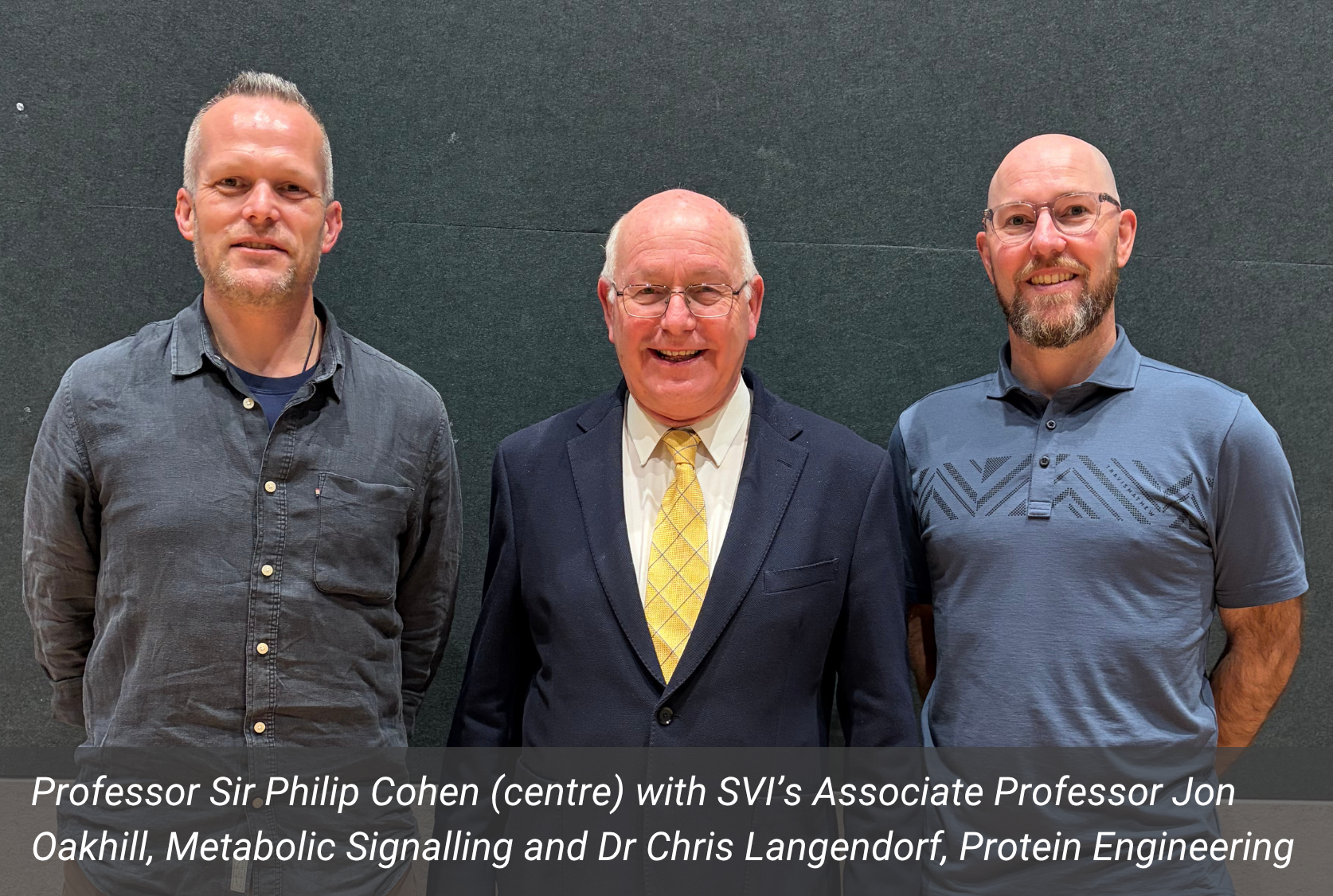 Professor Cohen studied at University College London before working with Nobel Laureate Edmond Fischer. He went on to build a world-leading research centre at the University of Dundee, the MRC Protein Phosphorylation Unit, and has published more than 580 papers.
Professor Cohen’s discoveries in protein phosphorylation are highly complementary with the work of SVI’s Professor Bruce Kemp AO, shaping how scientists understand cell signalling, inflammation and disease. Because phosphorylation controls many of the body’s key signalling pathways, Professor Cohen’s breakthroughs have helped to explain how cells grow, divide, respond to insulin, and what happens when these processes go wrong in diseases like diabetes and cancer. His work has earned him major international awards, as well as a knighthood in 1998.
SVI staff were particularly grateful for Professor Cohen’s generosity in staying for an extended Q&A. His visit was an inspiring highlight for the Institute and a reminder of the impact that deep, curiosity-driven research can have on human health.