Posted 13 July 2026
SVI researchers have been awarded a Breakthrough T1D INSPIRE grant to advance the development of an innovative mRNA vaccine that could one day help prevent type 1 diabetes before it starts.
Unlike traditional vaccines, which train the immune system to fight viruses or bacteria, this vaccine is designed to retrain the immune system to stop attacking the body’s own insulin-producing cells, the underlying cause of type 1 diabetes.
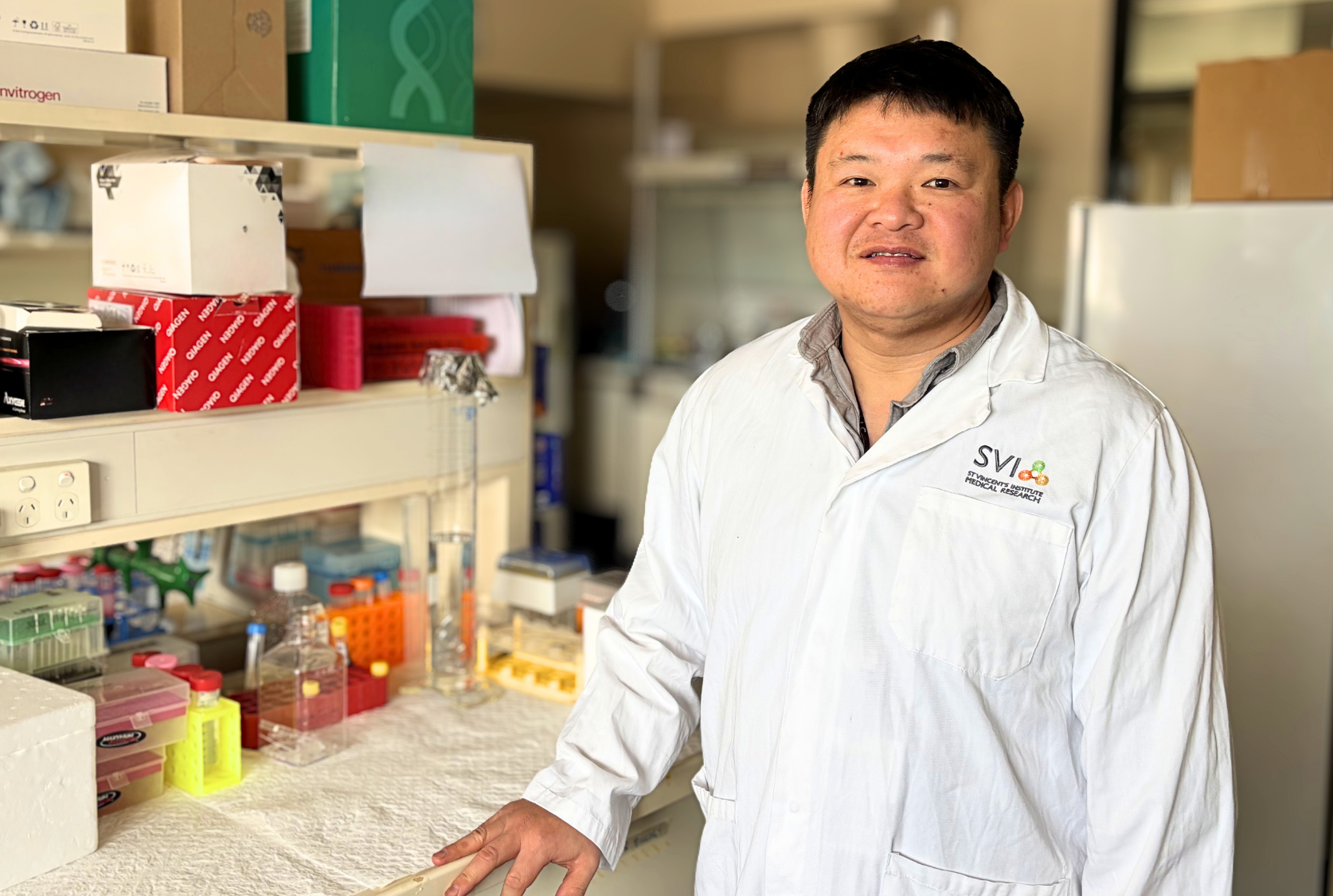
Led by Associate Professor Mark Chong, the project builds on promising preclinical research showing that this approach has the potential to prevent the development of type 1 diabetes by restoring immune tolerance in a highly targeted way.
“This funding allows us to take an exciting step towards translating a promising laboratory discovery into a potential new treatment for type 1 diabetes,” said Mark.
“Our hope is that one day we can intervene early enough to prevent the immune system from destroying the cells that produce insulin.”
The research brings together leading expertise from SVI and Monash University. Professor Colin Pouton, from the Monash Institute of Pharmaceutical Sciences, will contribute his team’s specialised mRNA delivery technology. SVI’s Associate Professor Bala Krishnamurthy will help evaluate how the vaccine affects the immune cells responsible for driving type 1 diabetes.
Together, the team will investigate the best time to deliver the vaccine, explore whether it can be combined with other promising immunotherapies, and develop a version suitable for testing with human cells. If successful, the project could reduce the need for lifelong insulin therapy,
Dr Dorota Pawlak, Chief Scientific Officer at Breakthrough T1D, said, “We are very excited about the potential of this research. Although this work is in its early stages, a vaccine for type 1 diabetes could prevent the progression of the disease altogether, bringing us closer to our vision of a world without type 1 diabetes.”
RNA & T Cell Biology
We interrogate the genetic mechanisms that control development of the immune system, to better understand human health and disease.
Lab head: Associate Professor Mark Chong