Posted 19 March 2026
The world‑leading, Australian‑developed artificial intelligence program BRAIx, designed to make breast cancer screening more accurate, personalised and efficient, has been given a major boost via a philanthropic gift from Australia’s leading prestige beauty retailer MECCA.
MECCA, through its social change arm, MECCA M‑POWER, will provide $500,000 in catalytic funding to fast‑track implementation of the BRAIx AI developments into a product platform to serve breast cancer screening programs, benefiting Australian women and saving more lives. This support comes on the back of an additional $1 million in philanthropic funding by MECCA towards real world prospective studies and a randomised controlled trial currently underway in Victoria and South Australia.
Professor Tom Kay, SVI Director, said this latest investment builds on MECCA’s longstanding support of the program and is a critical step toward real-world impact.
“MECCA have given generously over the years to advance the BRAIx program. We would not be where we are today without their significant contribution. Now, with MECCA’s catalytic funding, our teams can move BRAIx from world‑class algorithms to a patient‑ready solution improving outcomes for women across the country and beyond.”
Lisa Keenan, Chief Purpose Officer at MECCA, said the organisation is proud to support innovations that deliver meaningful change for women and girls.
“MECCA M‑POWER backs bold, practical solutions that improve the lives of women and girls. BRAIx is exactly that: a proven Australian innovation with the potential for global impact. We’re proud to support Helen Frazer, SVI and partners to bring it to the community.”
The BRAIx program is a partnership led by A/Prof Helen Frazer from St Vincent’s BreastScreen with computational biologist Associate Professor Davis McCarthy from St Vincent’s Institute of Medical Research (SVI), and others from St Vincent’s Hospital Melbourne, SVI, The University of Melbourne, The University of Adelaide and BreastScreen Victoria, and is funded by the Medical Research Future Fund.
A/Prof Helen Frazer, Clinical Director at St Vincent’s BreastScreen, said the program is focused on improving outcomes for women by enhancing current screening approaches.
“Screening saves lives, but we can do it better. By combining expert radiologists with AI, we can detect cancers earlier, reduce unnecessary recalls and personalise screening based on risk.”
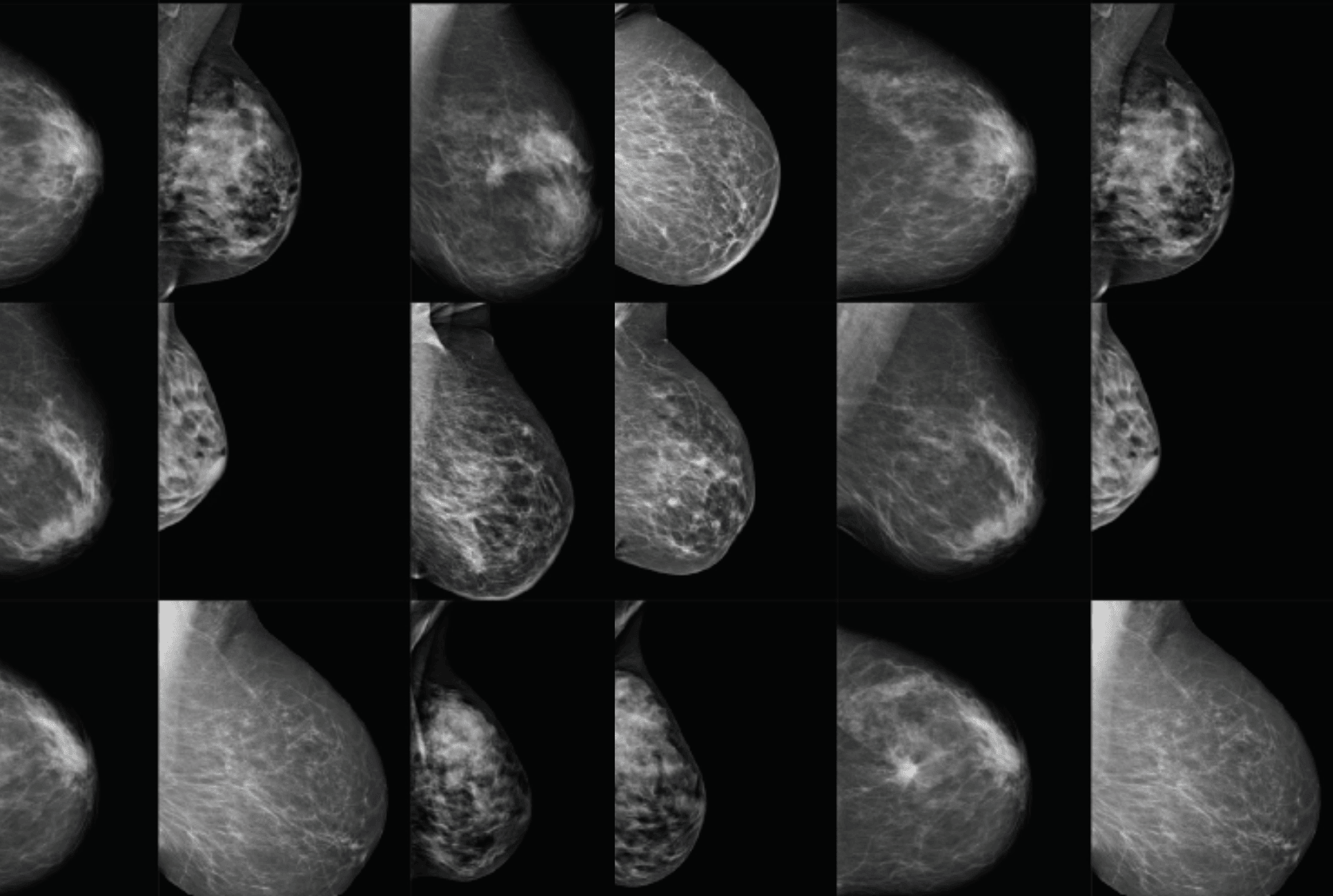
BRAIx aims to transform breast cancer screening by combining Australian‑built AI with radiologist expertise to detect cancers earlier, reduce unnecessary recalls, and tailor screening to each woman’s needs. The BRAIx tool can both read mammograms with accuracy comparable to specialist radiologists and generate a powerful four‑year risk score that predicts future cancer risk more accurately than traditional factors such as age, breast density or family history.
By identifying women at highest risk, including those with a nearly 10% chance of diagnosis within four years despite a previous all‑clear, BRAIx has the potential to deliver risk‑based screening designed to save more lives.
The BRAIx team is ensuring Australian AI capabilities are developed for use in our health system with the algorithm development, training and validation using millions of mammogram images from BreastScreen Victoria. This avoids dependency on international technology companies and algorithms, which hollow out Australian clinical and technical capabilities.
Associate Professor Davis McCarthy, Head of SVI’s Bioinformatics & Cellular Genomics Lab, said this Australian-first approach is key to building trust and delivering real clinical benefit.
“Training and validating BRAIx on Australian data means better accuracy, transparency and trust. This investment accelerates the technical, clinical and regulatory work that takes AI from promising research to safer, smarter screening in practice.”
The BRAIx detection algorithm is currently in a large scale Randomised Controlled Trial in BreastScreen Victoria and will launch soon in BreastScreen South Australia. In simulation and evaluation studies, AI‑assisted pathways reduced unnecessary recalls by up to ~10.9% and cut radiologist reading workload by ~50%, while maintaining or improving cancer detection.
The BRAIx risk score – developed using ~400,000 Australian screening exams, tested in ~96,000 more, and confirmed in an international cohort – more accurately estimated four‑year breast cancer risk than commonly used factors. Women in the top 2% risk band had a 9.7% probability of diagnosis within four years despite a prior all‑clear. This was recently published in The Lancet Digital Health and highlights the model’s power to pinpoint women who may benefit from earlier or more frequent imaging.
Find out more about the Bioinformatics & Cellular Genomics Lab